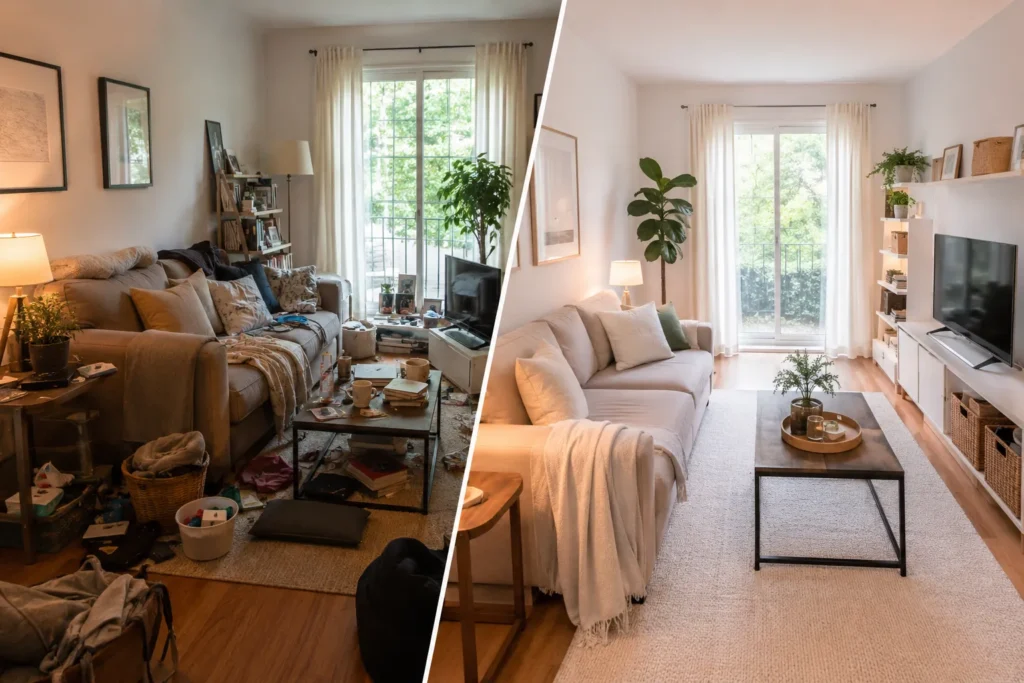
A small living room does not need to feel cramped. The goal is not to disguise the room or make it look empty. A better goal is to reduce visual interruptions, improve movement, and choose proportions that help the eye understand the space quickly. These changes can make a room feel calmer and easier to use without removing everything you like.
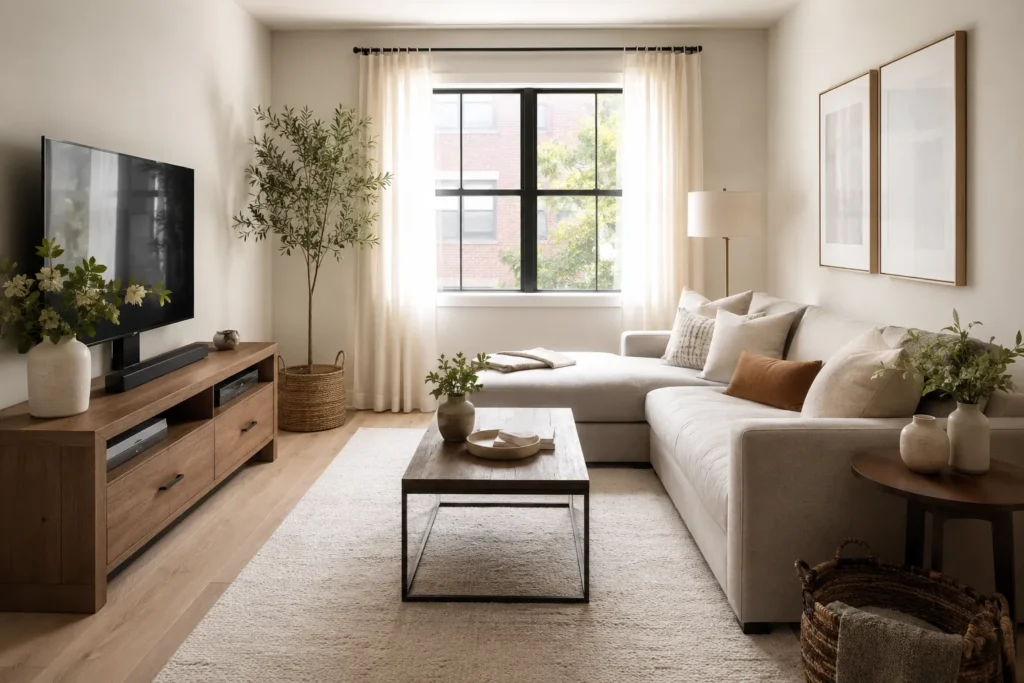
Start with the room’s real function
Before moving furniture, write down the two or three activities the room must support. A living room may need conversation seating, television viewing, homework space, toy storage, or a place for guests. When every possible activity is treated as equally important, small rooms become crowded. Give the most frequent activities the best space and use flexible pieces for occasional needs.
For example, a household that watches television daily but hosts only a few times a year may benefit from a comfortable sofa and two light chairs that can be moved when guests arrive. A household that rarely watches television may arrange seating around conversation and use a smaller screen on a swivel stand.
Create one clear walking path
Walk from the main doorway to the most-used seat, window, or connecting room. That route should not require turning sideways around furniture. You do not need huge gaps, but the path should feel obvious. Pulling every item against the wall can sometimes make the centre awkward, so test the layout rather than following a fixed rule.
- Remove small stools, baskets, or side tables from the floor temporarily.
- Place the largest seating piece first.
- Leave a clear route through the room.
- Add only the secondary pieces that support a real activity.
- Stand at the doorway and check whether the room reads as one calm arrangement.
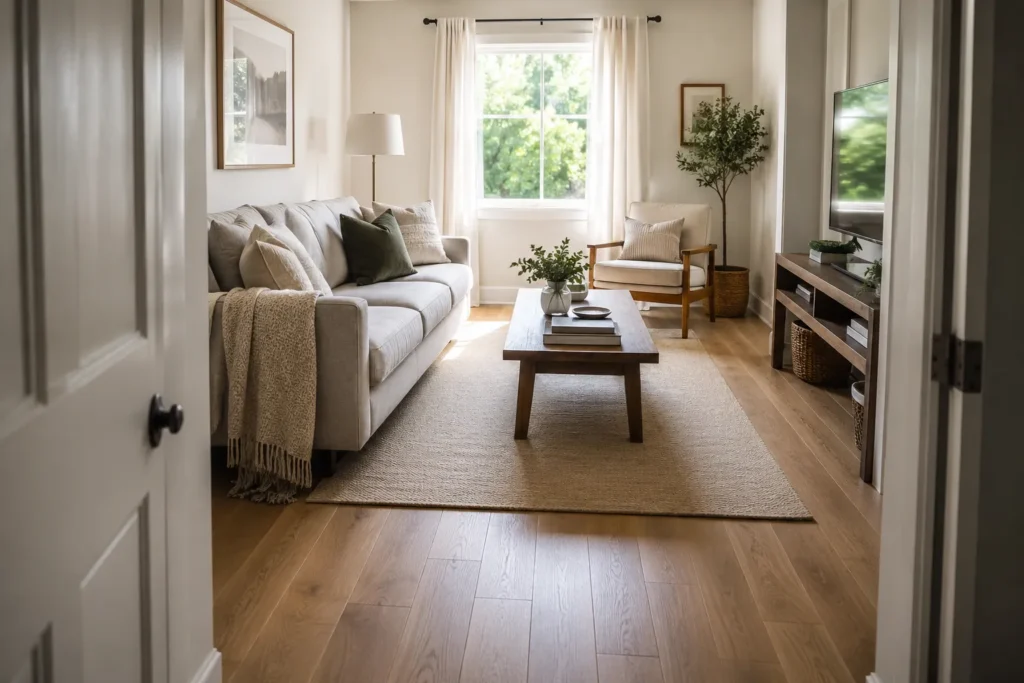
Choose furniture with the right visual weight
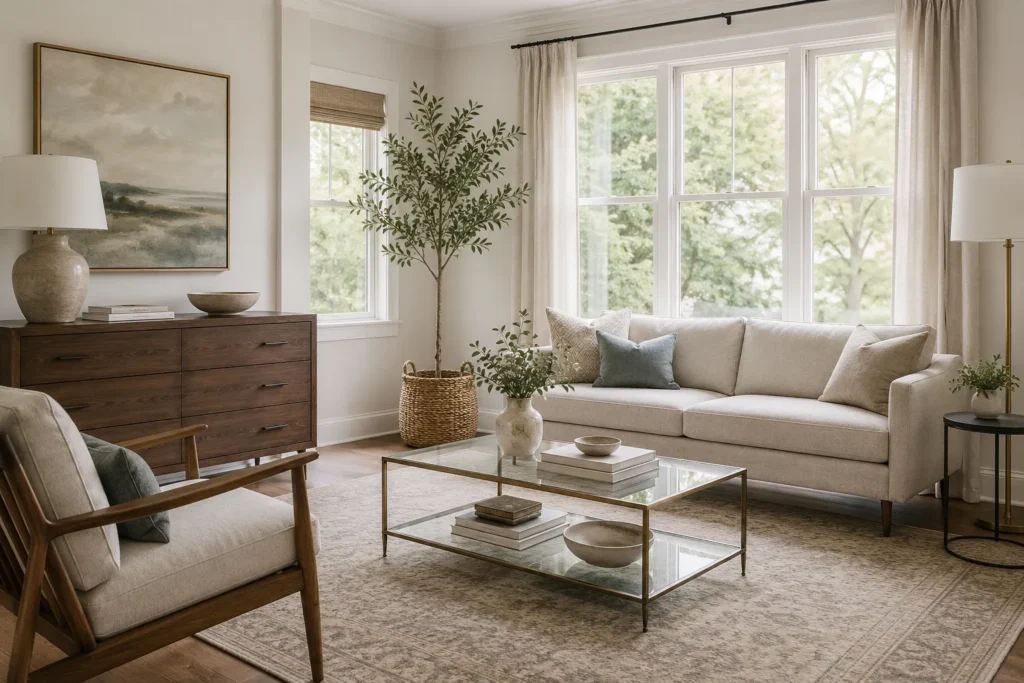
Furniture size is only part of scale. Visual weight also matters. A sofa with visible legs, a narrow arm, and a lower back may feel lighter than a boxy sofa with the same footprint. A glass or light-coloured coffee table can reveal more floor, while a solid dark chest may feel heavier. That does not mean every piece must be pale or delicate. One substantial anchor often looks better than many undersized pieces.
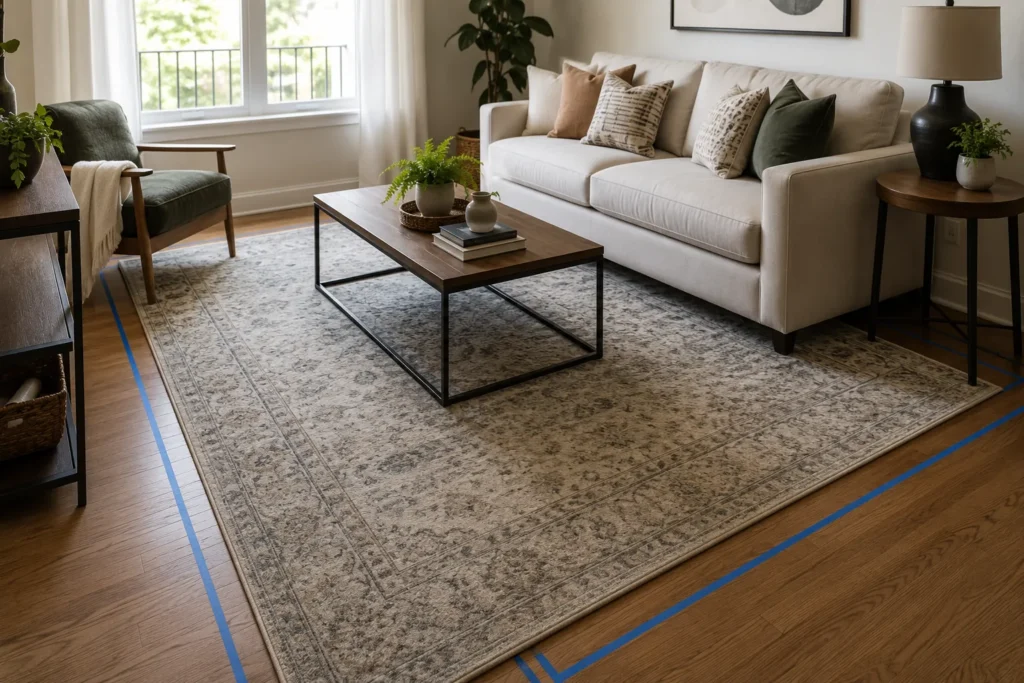
Measure before buying. Mark the dimensions on the floor with removable painter’s tape and live with the outline for a day. Check door swing, drawer clearance, and the ability to walk past the furniture. Measurements prevent the common mistake of choosing a piece that looks compact online but dominates the room in person.
Use a larger rug carefully
A rug that is too small can divide a compact room into disconnected islands. When possible, choose a rug large enough for at least the front legs of the main seating to rest on it. This connects the arrangement and gives the eye a larger continuous shape. Keep enough exposed floor near the walls to avoid a wall-to-wall effect unless that is intentional.
Keep the colour story simple, not colourless
A limited palette can reduce visual noise, but small rooms do not have to be all white. Choose one main neutral, one supporting colour, and one or two accents. Repeat those colours across cushions, art, books, or accessories so the room feels connected. Contrast is useful when it creates a focal point; scattered contrast on every surface can make the room feel busier.
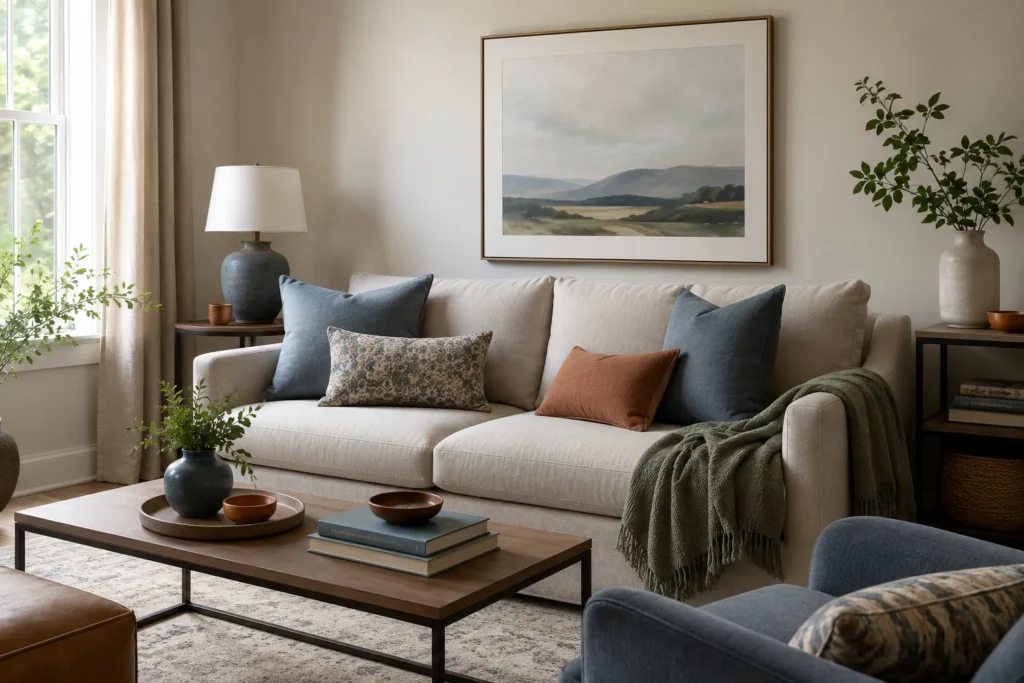
Improve light in layers
Relying on one ceiling light can leave dark corners that make a room feel smaller. Combine natural light with at least two additional light sources when possible. A floor lamp beside a reading chair and a small table lamp across the room can spread light more evenly. Keep lampshades and bulbs appropriate for the fixture and follow manufacturer safety guidance.
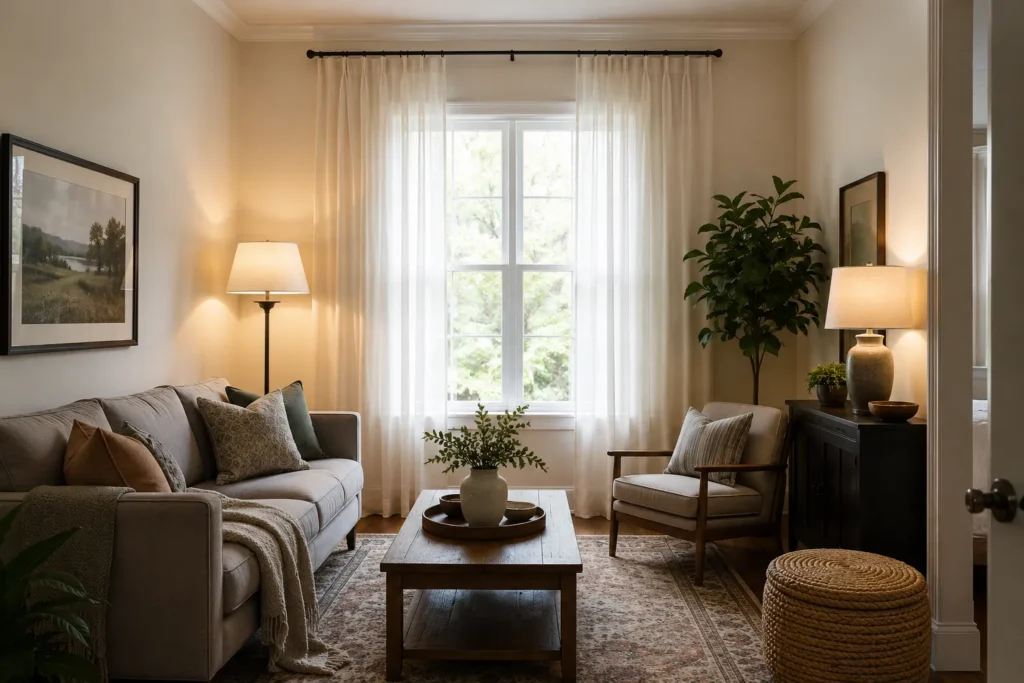
Use curtains to support height
When installation conditions allow, hanging curtains above the window frame and extending the rod beyond the glass can make the window area feel taller and wider. The exact placement depends on wall space, trim, heating units, and the curtain style. Measure from the planned rod position to the finished hem before ordering panels.
Give storage a boundary
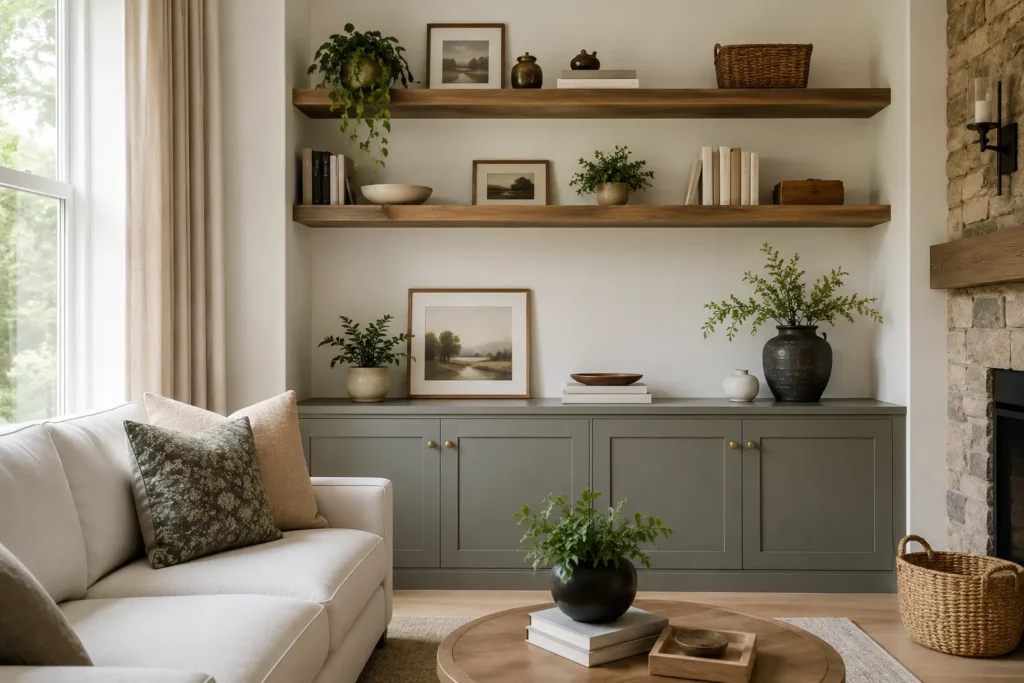
Open storage looks spacious only when it is edited. Choose a few useful or meaningful items for display and place less attractive supplies inside drawers, cabinets, or matching containers. Avoid buying a collection of small organizers before deciding what must be stored. A single closed cabinet may create more calm than several exposed carts.
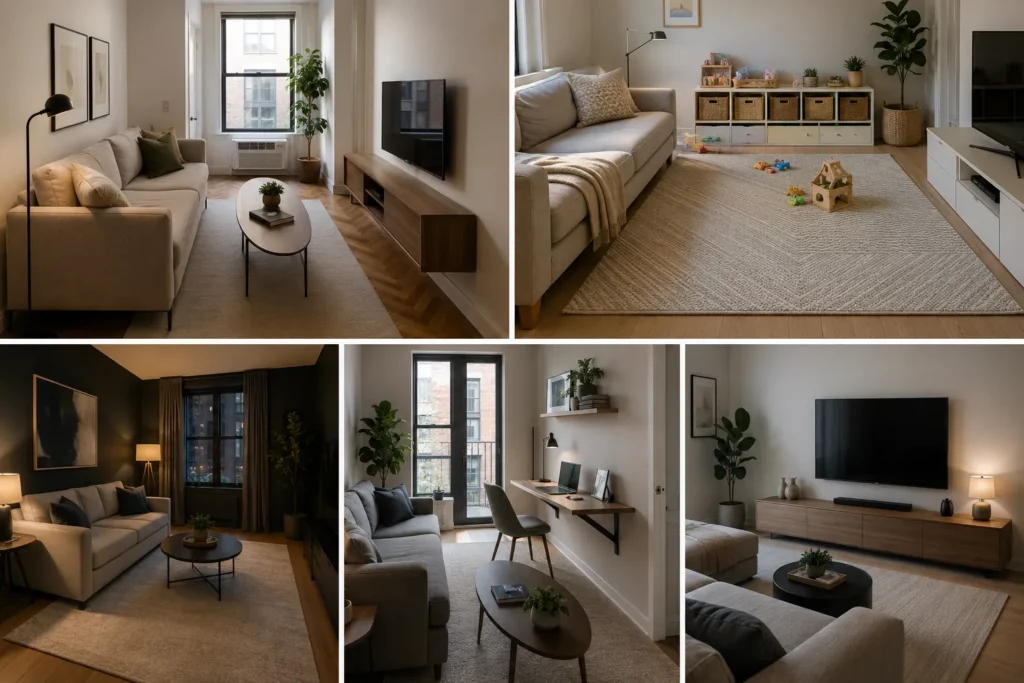
Five realistic examples
- Narrow apartment room: place a compact sofa along the longest wall, use a slim oval coffee table, and keep the route from entry to balcony clear.
- Living room with children: use one low cabinet for toys, limit the number of open baskets, and choose a washable rug sized to connect the seating.
- Rental with dark walls: add a large light-toned rug, warm lamps, and repeated pale textiles instead of repainting without permission.
- Room that doubles as an office: use a wall-mounted desk or narrow console and a chair that can serve as occasional guest seating.
- Television-focused room: mount or place the screen at a comfortable viewing height, hide excess cables safely, and avoid filling the surrounding wall with many small objects.
Common mistakes to avoid
Do not assume that tiny furniture automatically makes a room look larger. Too many small pieces create more edges and gaps. Avoid placing decor on every surface, blocking window light with oversized furniture, or choosing storage only because it is attractive. The room should remain easy to walk through and easy to reset after daily use.
Quick checklist
- Define the room’s two or three main functions.
- Keep one clear walking route.
- Measure furniture and mark the footprint before buying.
- Connect seating with an appropriately sized rug.
- Use layered lighting and repeat a limited colour palette.
- Give everyday clutter a clear storage home.
Frequently asked questions
Should all furniture touch the walls?
No. In some rooms it works, but a small gap behind a sofa or a floating chair arrangement can improve balance. Test the layout and protect walkways.
Do mirrors make a small room look bigger?
A mirror can reflect light and extend a sightline, but placement matters. Reflecting a bright window or calm view is usually more helpful than reflecting clutter.
Is white always the best wall colour?
No. Light colours can increase brightness, but warm neutrals, soft greens, muted blues, and even deeper colours can work when lighting and contrast are considered.
How much decor should a small living room have?
There is no fixed number. Use enough to make the room personal, then leave some empty space so important objects can be noticed.
Related reading
Continue with How to Choose the Right Rug Size for a Living Room, How to Make a Bedroom Feel Cozy Without Buying Everything New, and How to Declutter One Room Without Feeling Overwhelmed.