A cozy bedroom is less about owning a particular style of furniture and more about how the room supports rest. Warmth comes from comfortable lighting, soft texture, useful layers, personal objects, and a layout that feels settled. Before buying new decor, work with what you already have and identify the one or two changes that would make daily use easier.
Begin with a ten-minute reset
Remove laundry, empty packaging, unrelated paperwork, and items that belong in another room. Make the bed, clear one bedside surface, and open the curtains. This is not a full declutter. It simply reveals the room you are actually decorating. It is difficult to judge colour, balance, or needed storage when every surface is carrying temporary items.
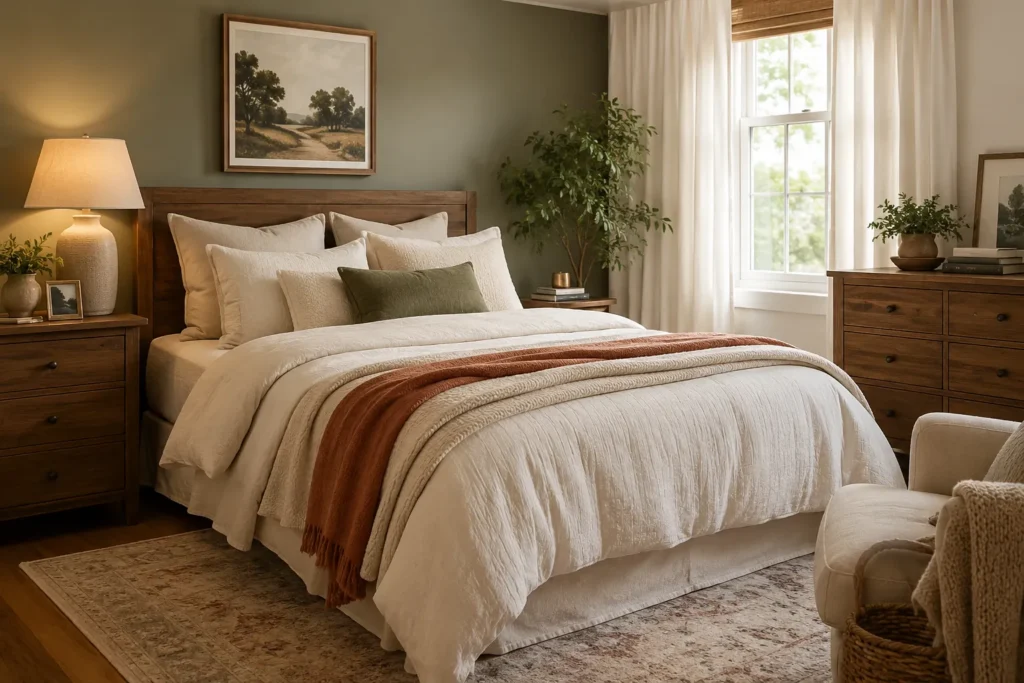
Choose the bed as the visual anchor
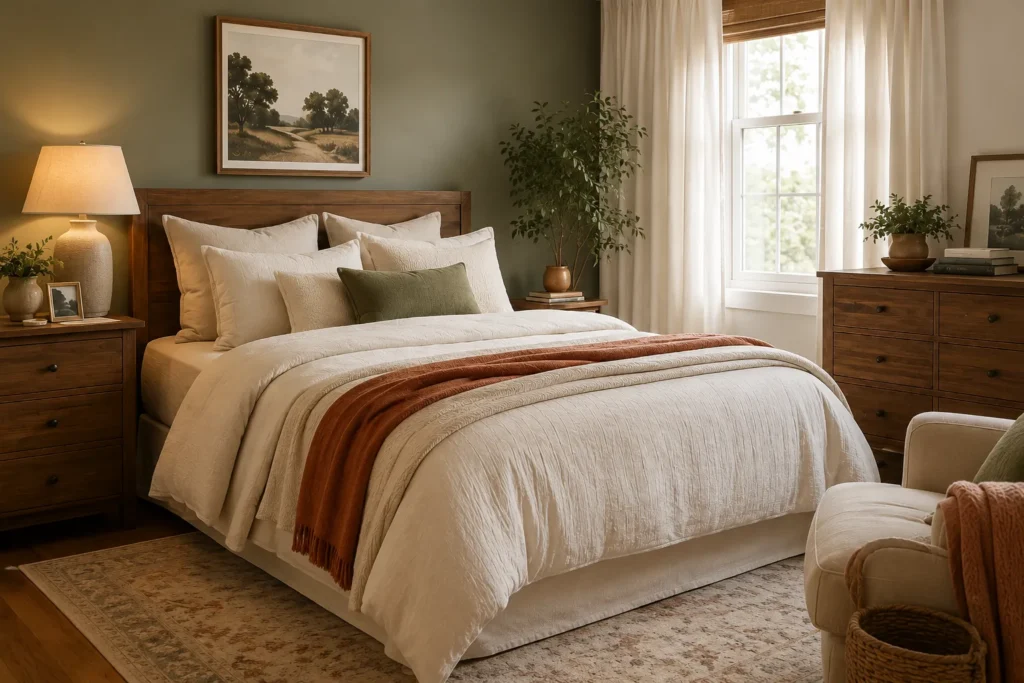
In most bedrooms, the bed is the largest object and naturally becomes the focal point. Look at it from the doorway. If the bedding has many unrelated colours or patterns, simplify the visible layers. You do not need a new bedding set. Turn a patterned duvet to its calmer side, fold a solid blanket across the foot, or repeat one colour from existing bedding in a cushion or small piece of art.
Keep comfort practical. Use the number of pillows you are willing to move and replace each day. A bed covered with decorative cushions can look inviting in a photograph but become annoying if the room has no place to put them at night.
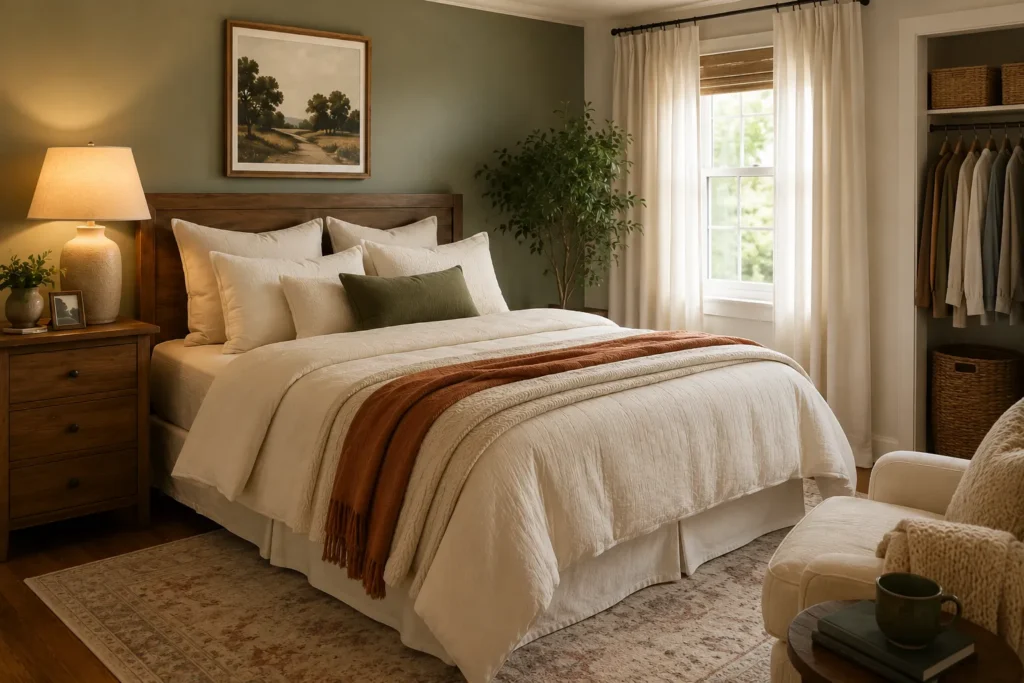
Layer lighting instead of using one harsh source
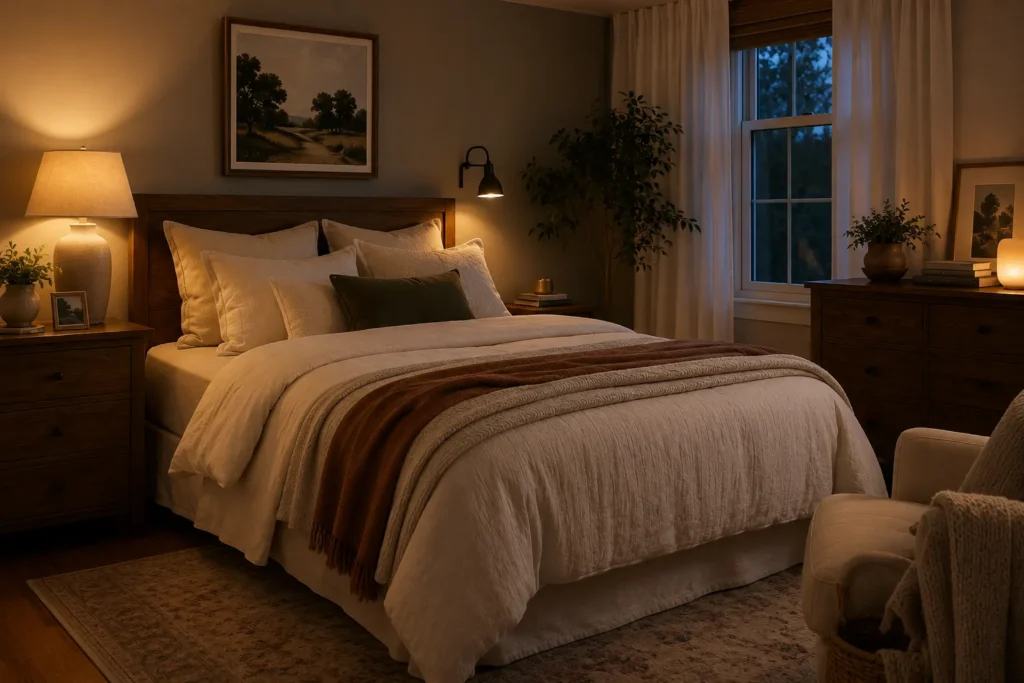
Cozy rooms usually have light at more than one height. If the ceiling light is bright and flat, add a bedside lamp or a safe plug-in wall light. Matching lamps are not required; similar shade colours or bulb temperatures can make different lamps feel related. Use bulbs that are compatible with the fixture and follow the manufacturer’s wattage and safety instructions.
Think about activities. A reading light should illuminate the page without shining directly into another person’s eyes. A small warm light near the door can make nighttime movement easier. Decorative string lights should be used only according to their safety instructions and should not be placed where fabric can overheat.
Use texture where you touch the room
Texture is most useful where it improves comfort: bedding, a throw, a rug beside the bed, curtains, or an upholstered chair. Start with one or two layers rather than adding texture everywhere. A cotton quilt, knitted throw, woven basket, and soft rug can work together because they have different surfaces but a related natural feel.
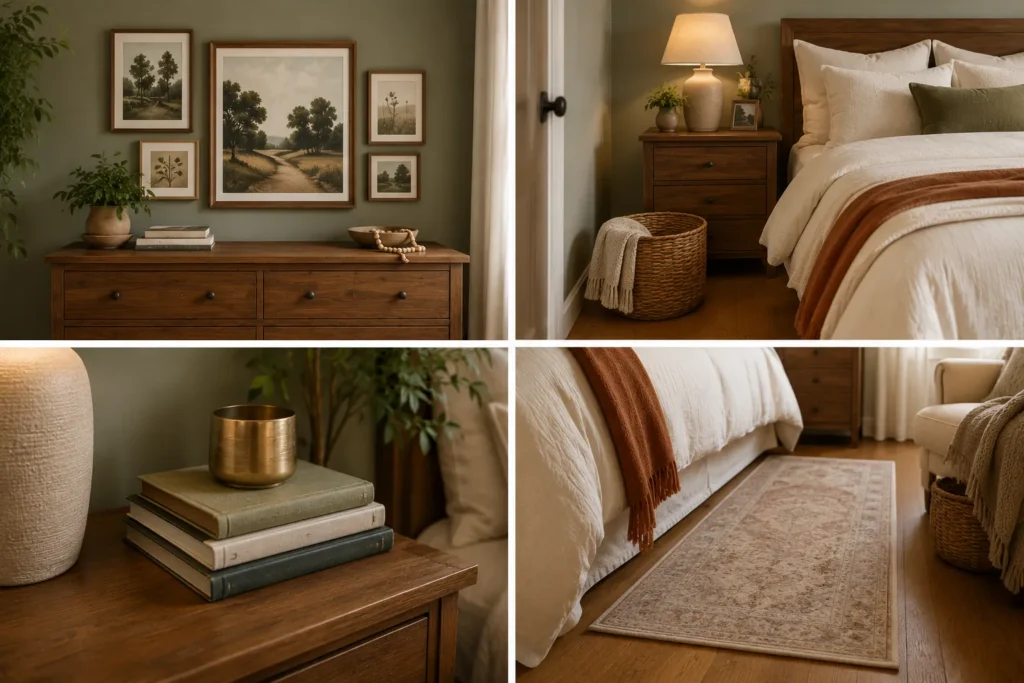
Repeat colours to create calm
Choose a small palette from items already in the room. You might use cream, warm wood, muted green, and a small rust accent. Repeat the accent two or three times so it looks intentional. The repeats do not need to match exactly. A green book cover, a plant pot, and a line in a piece of art can connect the room without creating a themed look.
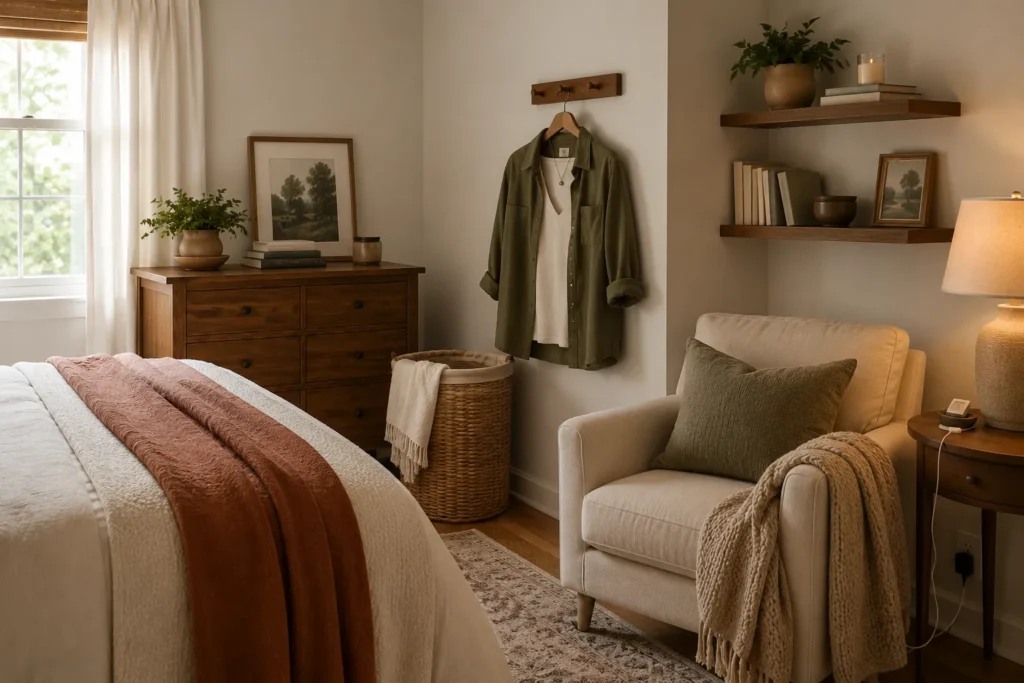
Improve the bedside area
A bedside surface feels calmer when it supports a short list of needs. Keep a lamp, water, current book, and perhaps one personal object. Use a small dish for jewellery or earplugs. Move backup toiletries, old receipts, chargers that are not used, and unrelated papers elsewhere. If the table has no drawer, one lidded box or small basket can hide useful items without creating a pile.
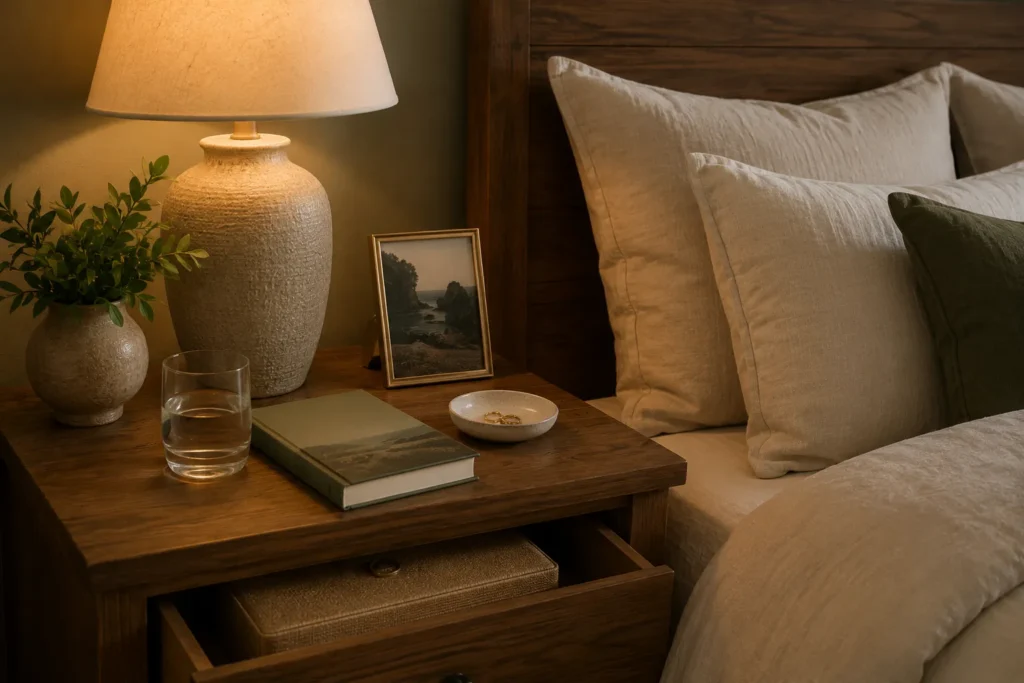
Make the room quieter visually
Visual noise can come from exposed cords, many small objects, overfilled open shelves, mismatched hangers, or clothes stored on chairs. Solve the repeated problem rather than hiding it for a photograph. If clothes collect on a chair, add a hook for tomorrow’s outfit and a hamper where clothes are actually removed. If charging cables spread across the floor, use a safe cable clip or charging tray near the outlet.
Five no-cost or low-cost examples
- Use existing art differently: group two small pieces above a dresser instead of scattering them around the room.
- Shop your home: move a small lamp, basket, or framed print from a less-used room and test it for a week.
- Turn books into colour blocks: stack only a few books with related spines on a bedside table.
- Improve the bed silhouette: pull the bed slightly away from a crowded corner if space allows and centre it with the main wall.
- Create a soft landing: place an existing runner beside the bed rather than buying a large rug immediately.
When buying one item makes sense
After rearranging, identify the biggest remaining problem. If the room is dark, a lamp may be more useful than wall decor. If clothing has no home, a hamper or hooks may matter more than cushions. If the bed feels unfinished, properly sized curtains or a simple coverlet may have more impact than several small accessories. Choose the item that solves a repeated daily issue.
Common mistakes
Avoid buying a complete matching decor set before understanding your room. Do not block heating, ventilation, doors, or safe access to outlets. Avoid adding many scented products as a substitute for cleaning or ventilation, especially if household members have sensitivities. Do not overcrowd bedside tables with objects that must be moved every night.
Quick cozy-bedroom checklist
- Clear temporary clutter and make the bed.
- Choose a simple colour palette from items you already own.
- Add light at bedside height.
- Use texture where it improves comfort.
- Give clothes, cables, and small essentials a clear home.
- Buy only after identifying the room’s biggest remaining problem.
Frequently asked questions
Do I need warm beige colours for a cozy room?
No. Cozy rooms can use blue, green, grey, white, or deeper colours. Comfort depends on balance, lighting, texture, and personal preference more than a single palette.
How many pillows should be on the bed?
Use the number that feels comfortable and can be managed easily. Two sleeping pillows plus one or two decorative cushions may be enough for many beds.
Can a minimalist bedroom feel cozy?
Yes. Minimalism can feel warm when materials, lighting, and a few meaningful objects are chosen carefully.
What should I change first in a very plain bedroom?
Start with lighting and the bed area because they affect both function and the largest visual surface.
Related reading
See How to Choose Curtains for a Cozy Bedroom, How to Make a Small Living Room Look Bigger, and A Realistic Weekly Home Reset Routine.