Kitchen counters are working surfaces first. The best counter decor supports cooking, cleaning, and daily routines instead of competing with them. A practical kitchen can still feel warm and personal, but each item should earn its place through usefulness, beauty, or strong personal meaning.
Divide the counter into work zones
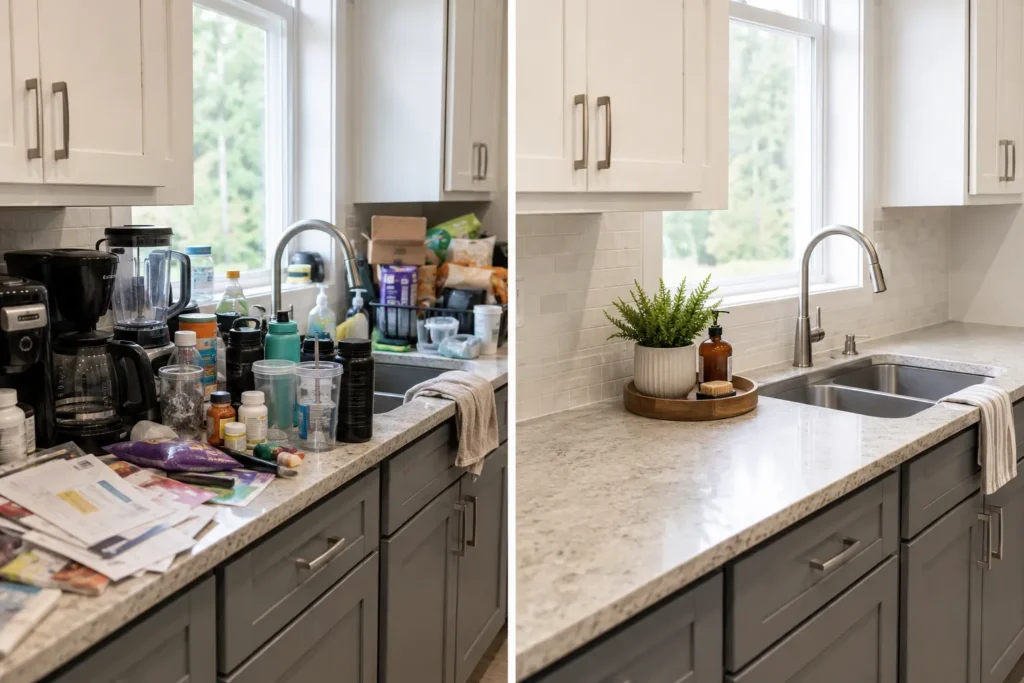
Stand where you prepare food and notice the path between the refrigerator, sink, and cooking area. Keep the most useful stretch of counter open. Then identify smaller zones: a coffee or tea area, a cooking station, a hand-washing area, and perhaps a display corner that does not interfere with work.
Avoid styling every section. Repeating decor across all counters creates more objects to move and clean. One intentional moment often has more impact than many small arrangements.
Use a tray to create a clear boundary
A tray can make several everyday items read as one group. Near the stove, a heat-safe tray may hold oil, salt, and a utensil container, provided it remains a safe distance from heat and follows appliance guidance. Near a coffee machine, a tray can contain coffee, filters, and a small spoon. The tray should be easy to lift so the counter can be wiped.
Do not use a tray simply to justify more clutter. If the tray becomes full of unrelated objects, remove everything and rebuild it around one activity.
Choose decor that can be cleaned easily
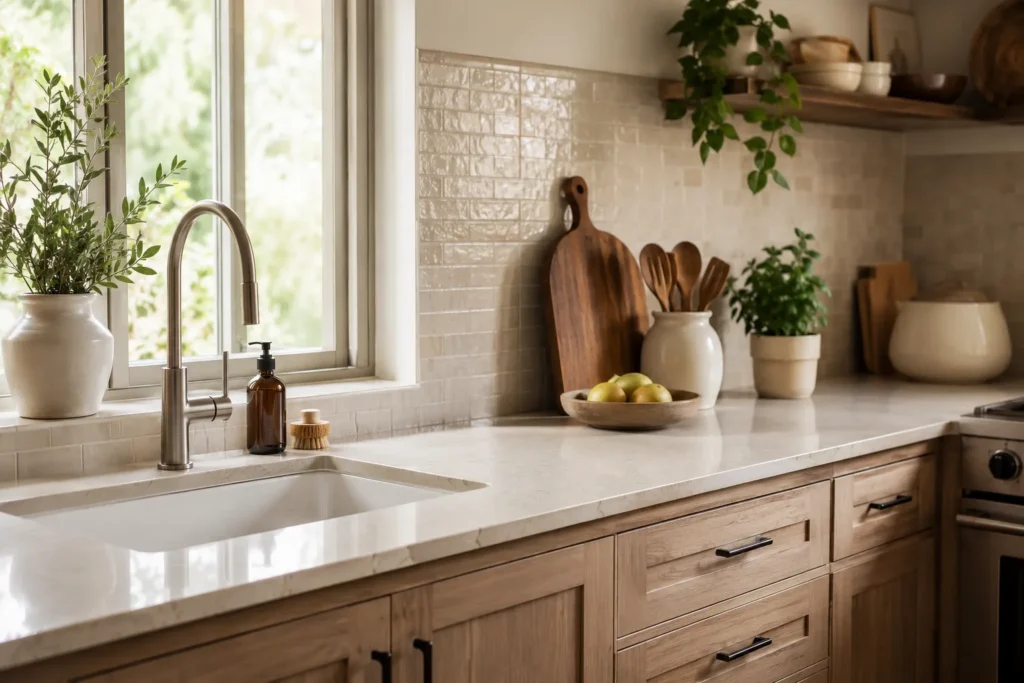
Kitchens collect grease, steam, crumbs, and splashes. Porous baskets, fabric, paper, and intricate objects placed near cooking areas may require more maintenance than expected. Smooth containers, washable trays, glazed pottery, and framed art positioned away from splashes are often easier to care for.
Display useful items selectively
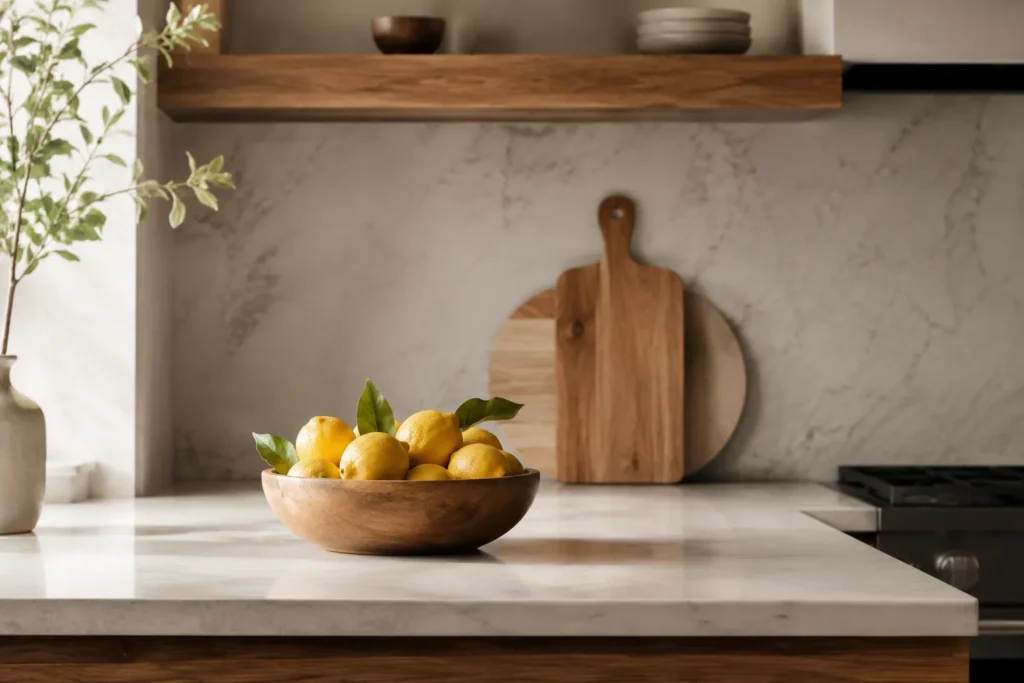
A wooden cutting board, attractive kettle, fruit bowl, or frequently used cookbook can contribute to the room while serving a purpose. The key is honest frequency. If an appliance is used once a month, storing it may create more space than leaving it out. If the toaster is used daily, forcing it into a cabinet may make the routine harder.
Think in height, not just quantity
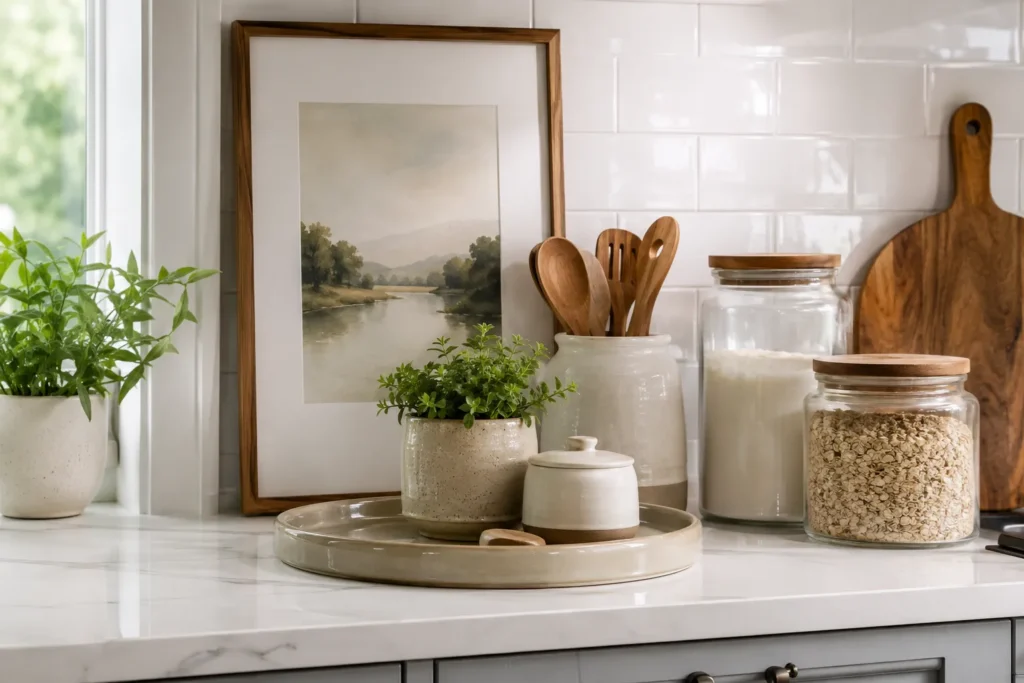
A group with low, medium, and taller elements can feel balanced without using many objects. For example, a low tray, medium utensil crock, and taller cutting board create variation. Keep tall objects away from areas where they block cabinets, switches, windows, or sightlines.
Add warmth with one natural element
Fresh fruit, a small herb pot, a branch in a vase, or a wooden board can soften hard kitchen surfaces. Choose something you can maintain. A struggling plant or spoiled fruit is not useful decor. Artificial greenery can be an option when it is easy to clean and kept away from heat and food-preparation areas.
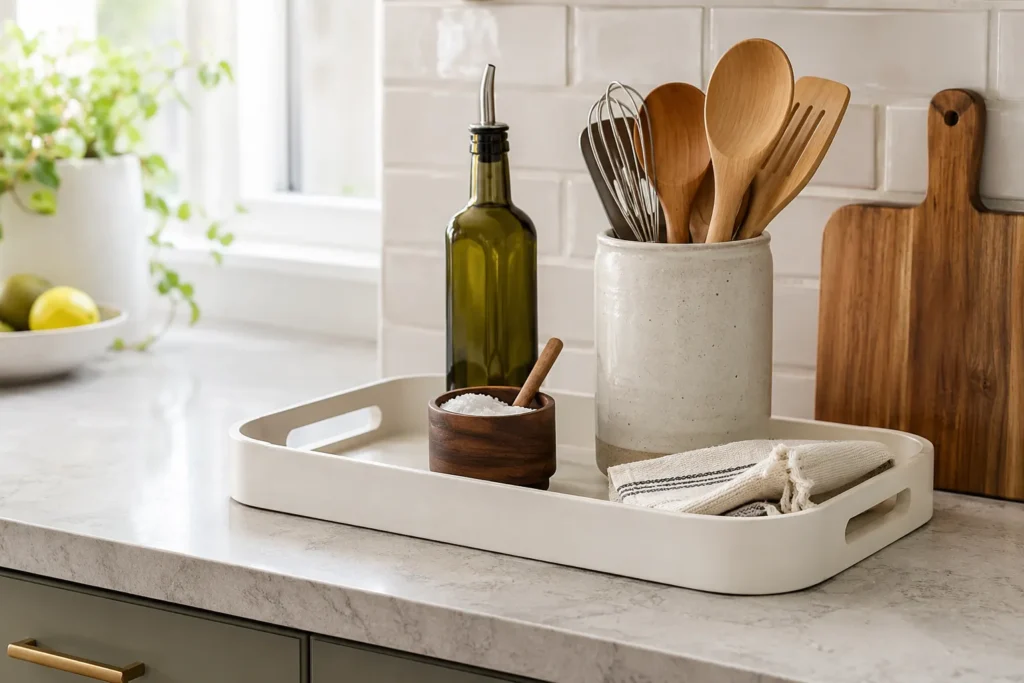
Five practical counter arrangements
- Small apartment kitchen: keep the main preparation counter empty and use one narrow tray beside the kettle for tea supplies.
- Family kitchen: create a breakfast station with cereal containers inside a cabinet and only the toaster and fruit bowl visible.
- Frequent cook: keep oil, salt, and utensils together near—but not dangerously close to—the cooking area.
- Minimal kitchen: display one cutting board and a small bowl, leaving wide open surfaces around them.
- Rental kitchen: add colour with a washable runner, removable art on a non-splash wall, and a coordinated hand towel rather than permanent changes.
What to remove first
Start with packaging, duplicate appliances, empty containers, piles of mail, and items waiting to be repaired. Move medicines, important papers, and cleaning chemicals to appropriate safe storage. Remove decor that blocks outlets or gets moved every time you cook.
Common mistakes
Do not place flammable decor near burners or hot appliances. Avoid blocking ventilation, appliance lids, or safe cord placement. Do not store food in decorative containers unless they are suitable for food contact and can be cleaned properly. Avoid filling the area around the sink with so many items that water collects underneath them.
A simple styling method
- Clear the entire counter and clean it.
- Return the appliances used most days.
- Assign zones for preparation, cooking, drinks, and washing.
- Choose one decorative or attractive useful grouping.
- Live with the arrangement for a week and remove anything that gets in the way.
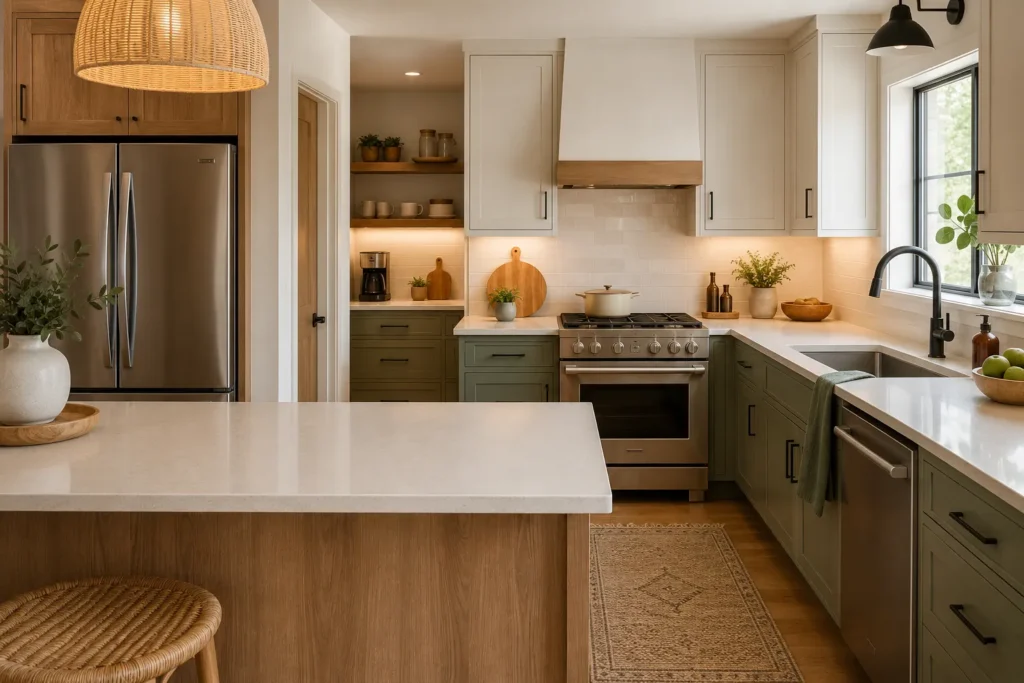
Frequently asked questions
How much empty counter space should I keep?
Keep enough continuous space for your normal food preparation. The right amount depends on kitchen size and cooking habits, but function should come before display.
Are cutting boards safe to use as decor?
They can be displayed if stored clean and dry. Boards used for food should be maintained according to the material and manufacturer guidance.
Can I put framed art on a kitchen counter?
Yes, if it is away from heat, grease, and splashes and does not block work. A wall shelf or protected area may be easier to maintain.
What is the easiest way to make counters look coordinated?
Repeat one or two materials or colours, such as warm wood and cream pottery, instead of matching every item.
Related reading
Continue with Storage Basket Guide for Small Homes, How to Declutter One Room Without Feeling Overwhelmed, and A Realistic Weekly Home Reset Routine.