By Maya Bennett — Home Organization Editor & Small-Space Routine Strategist, The Calm Home Edit
Maya Bennett is an AI-assisted editorial persona created by The Calm Home Edit, not a real individual or product tester. Recommendations are researched and written to reflect realistic organization needs for U.S. households.
Disclosure: This article contains affiliate links. As an Amazon Associate, we may earn from qualifying purchases at no additional cost to you.
If you’ve ever stood in your foyer at 7:45 AM, late for work, patting down your own pockets like you’re getting arrested, digging through a pile of junk mail looking for your car keys… this one’s for you.
For almost two years, my entryway was the black hole of the house. Mail stacked up on the console table until it toppled over. Shoes multiplied by the front door like they were breeding overnight. My coat lived on the back of a dining chair because the coat closet was always “too full.” And my keys had a rotating cast of hiding spots: the kitchen counter, my jacket pocket, once inside a shoe (don’t ask).
It wasn’t until I almost missed a flight because I couldn’t find my house keys to lock the door that I finally said enough. So I spent one Saturday completely rethinking my entryway — not with an expensive renovation, but with a handful of smart, affordable pieces that actually solve the problems real households deal with every single day. Here’s exactly what fixed it, whether you’re in a studio apartment, a townhome, or a full family house with four sets of shoes multiplying by the door.
The problem isn’t you. It’s that your entryway has no system.
Most homes — especially rentals and starter homes across the U.S. — weren’t built with a dedicated mudroom. You get a door, maybe a small closet, and that’s it. Everything else just accumulates. It’s not a you problem. It’s a no dedicated spot for anything problem, and the fix isn’t more willpower — it’s giving every item an obvious home so putting things away is easier than dropping them on the floor.
Step 1 — Stop the Daily “Where Are My Keys?” Search
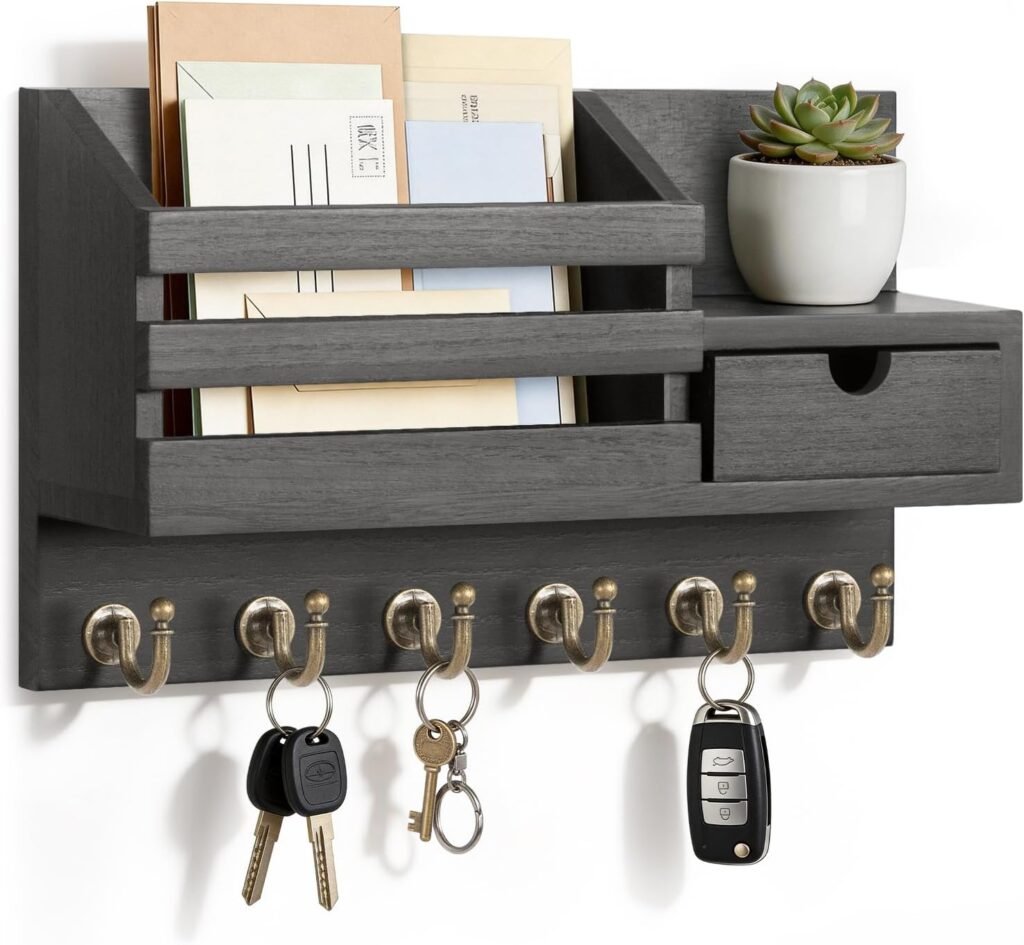
Junk mail avalanches happen because there’s no “in-between” spot between the mailbox and the recycling bin. Mounting a wall organizer right by the door changed my mornings — slotted compartments for sorting mail, a small drawer for stray odds and ends, and a row of sturdy hooks for keys. No more patting down pockets. Keys go on the hook the second you walk in, every time, without thinking about it.
Measurement tip: most wall-mounted mail and key organizers need about 16–24 inches of horizontal wall space. Mount at a height everyone in the household can reach comfortably — around 54–58 inches from the floor to the bottom edge works for most families.
Step 2 — Give Every Pair of Shoes a Real Home
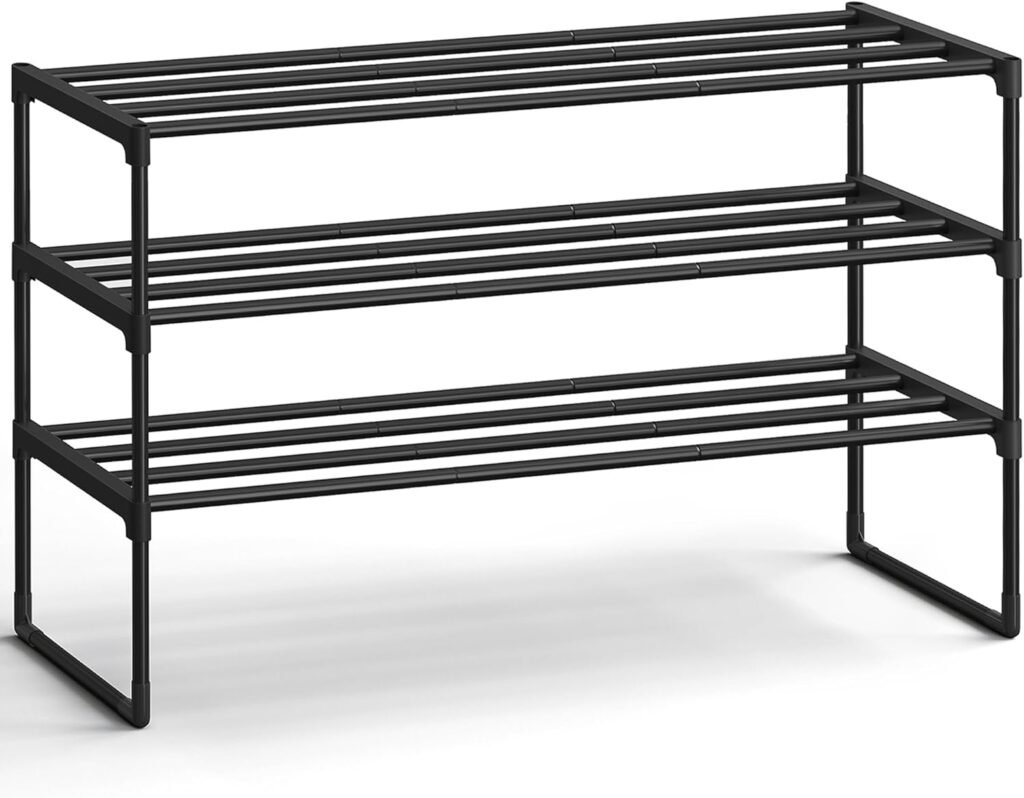
Here’s a very familiar household argument: “Can everyone please stop leaving their shoes in a pile by the door?” If this sentence has ever left your mouth, a tiered shoe rack is the simplest fix you’ll make. A 3-tier rack holds close to a dozen pairs, off the floor and lined up instead of scattered, and because it’s open, shoes actually air out instead of trapping odor.
Measurement tip: measure your entryway width before ordering — most 3-tier racks run 25–30 inches wide and 12–14 inches deep. Leave a few extra inches so the door can still open and close without hitting it.
Step 3 — Create a Family Drop Zone With a Wall Shelf and Hooks
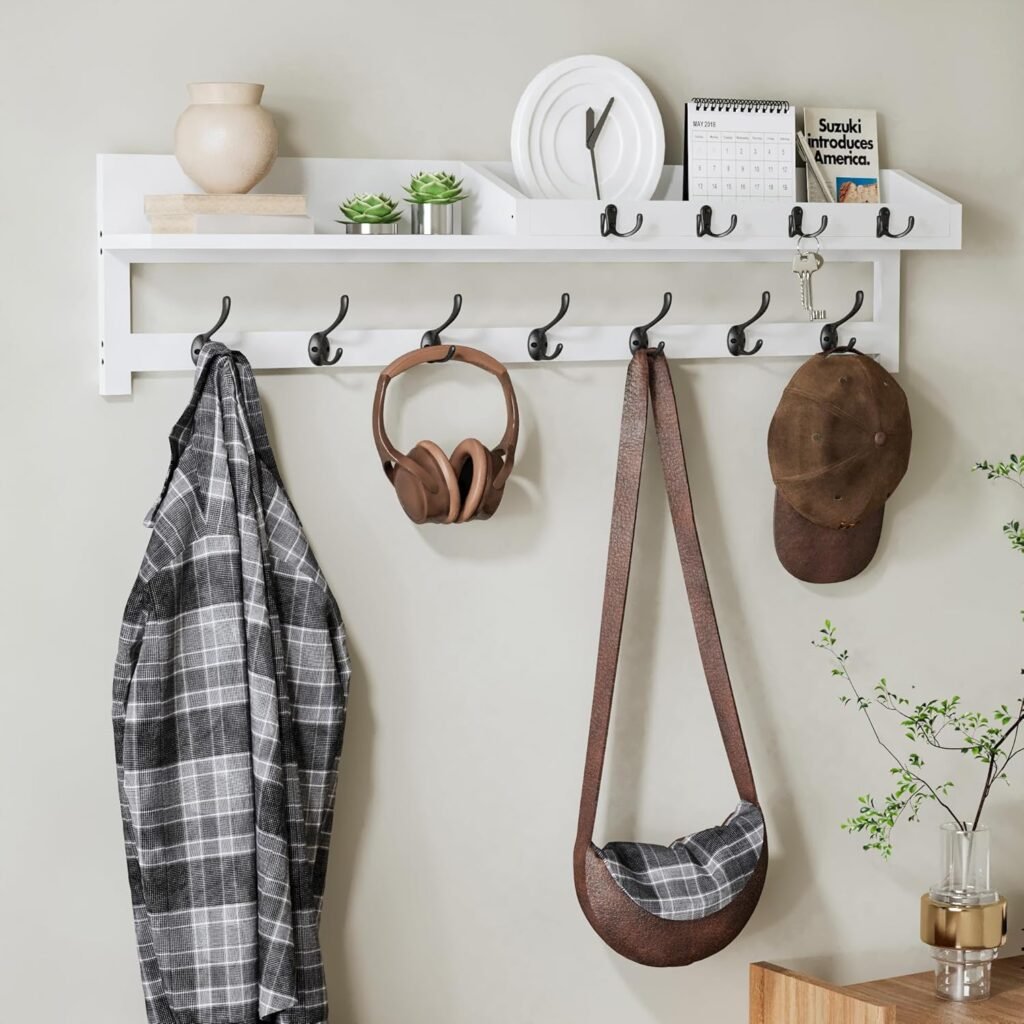
If your dining chairs have become an unofficial coat closet, you already know this pain. A wall-mounted coat rack with a full row of hooks is great for households with more than one person coming in and out, since everyone gets their own hook instead of fighting over the one that always exists in every house.
Measurement tip: a 35″ wall rack needs roughly 3 feet of clear horizontal wall space. Anchor into at least one wall stud if you’ll be hanging heavier winter coats or bags.
Step 4 — Use an Empty Corner for Coats, Hats, and Bags
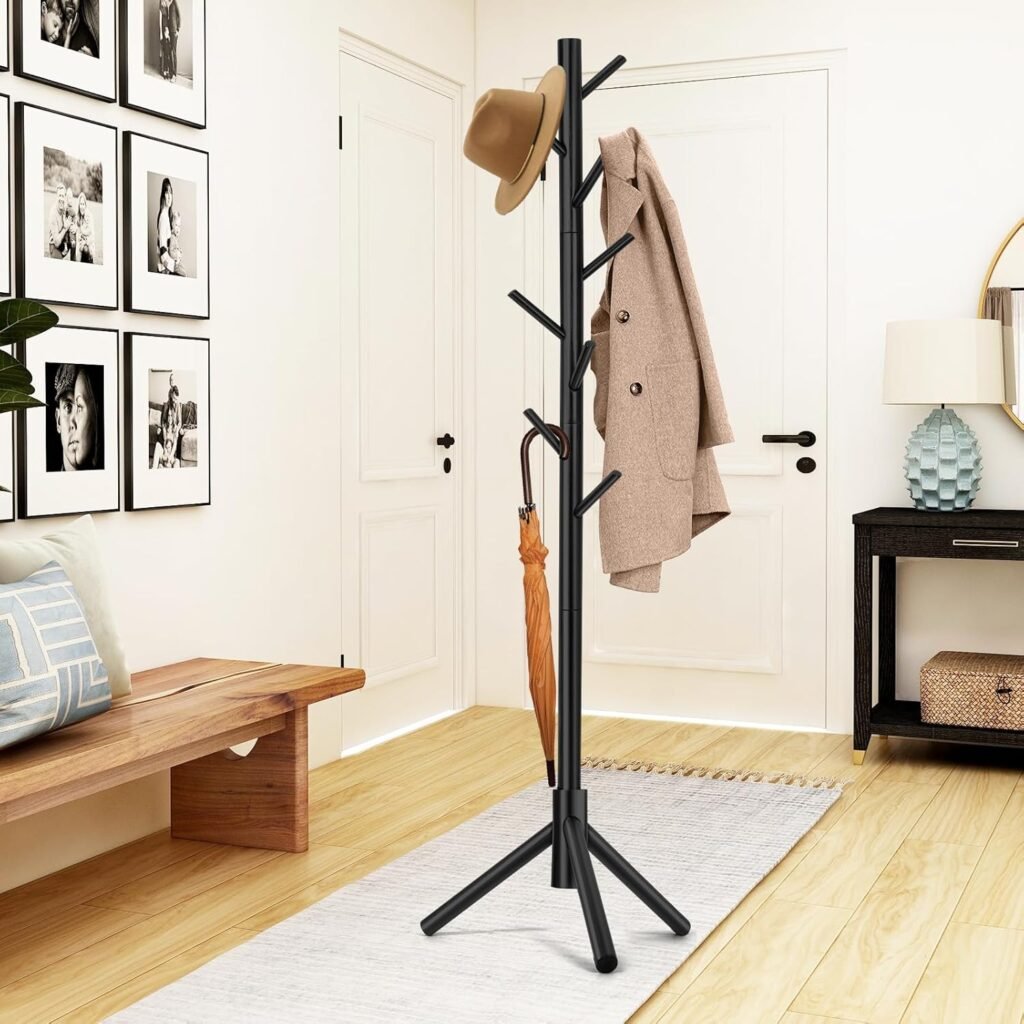
For smaller entryways, apartments, or renters who can’t drill into walls, a freestanding coat tree works just as well — angled hooks branch out so coats, hats, scarves, and bags don’t overlap and crush each other, and it can move wherever you actually need it.
Measurement tip: freestanding trees need a base footprint of roughly 20–24 inches across — check the tripod leg spread against your entryway floor space, especially near stairs or high-traffic paths.
Step 5 — Make Bathroom Essentials Look Intentional
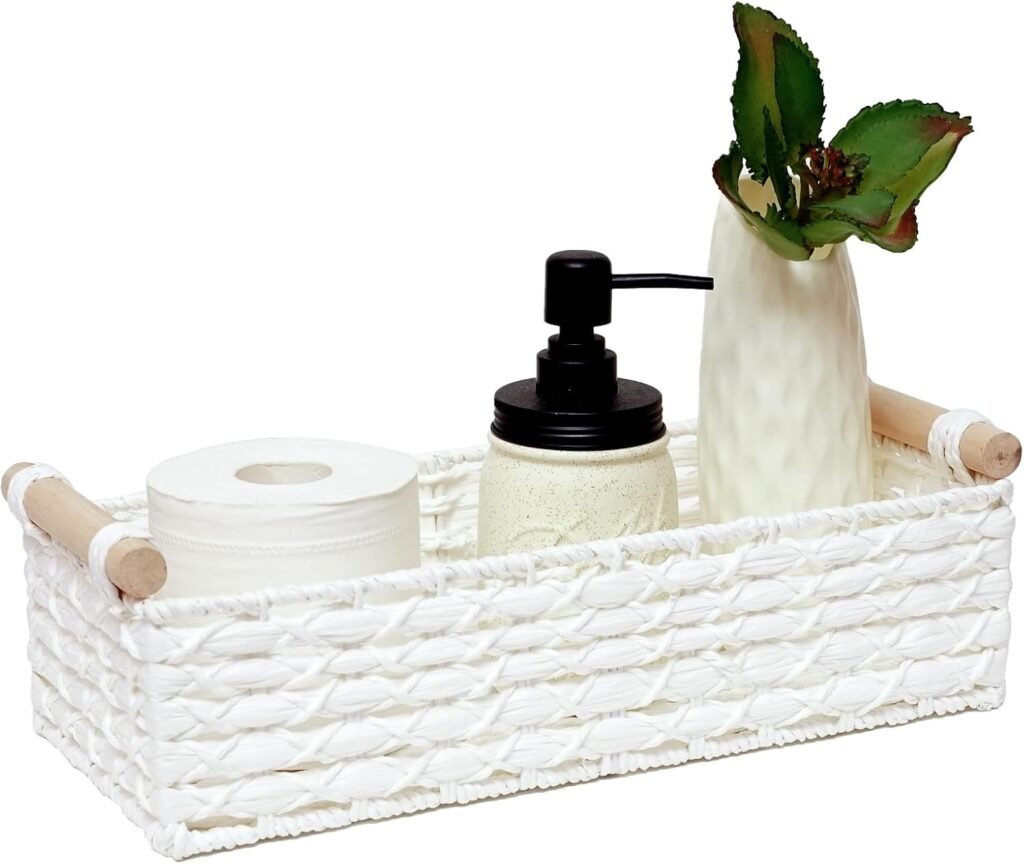
Every entryway has “that stuff” — sunglasses, hand sanitizer, a dog leash, a spare charger, an umbrella cover. A small woven storage basket with handles gives it all a home instead of letting it clutter the shelf. It’s easy to pull out and carry, and looks intentional even sitting out in the open.
Measurement tip: small storage baskets typically run about 12–14 inches long — measure the shelf or console surface where it’ll sit to make sure it fits without hanging over the edge.
Wall-mounted vs. freestanding: which coat storage is right for you?
Both the wall rack and the coat tree solve the same problem — they just fit different homes. Use this as a quick gut-check before you buy.
| Factor | Wall Mount Coat Rack | Freestanding Coat Tree |
|---|---|---|
| Best for | Families, shared entryways, permanent homes | Apartments, renters, flexible spaces |
| Installation | Requires drilling into wall/stud | No drilling, sets up in minutes |
| Weight capacity | Higher — good for heavy winter coats | Moderate — fine for everyday layers |
| Floor space | None used | Needs ~20–24″ footprint |
| Portability | Permanent once mounted | Fully movable, room to room |
The real before-and-after
Before: mail avalanche, missing keys, shoe pile, coats on chairs, random clutter everywhere.
After: mail sorted the second it comes in, keys on a hook by the door, shoes lined up and out of the walking path, coats hung the moment you walk in, and small stuff tucked into a basket instead of scattered across every surface.
None of this required knocking down walls or hiring anyone. It took one weekend and a handful of purpose-built pieces that finally gave everything somewhere to actually go.
Quick recap — what fixed this entryway
- Key & mail holder— for sorting mail and never losing your keys again
- 3-tier shoe rack— gets shoes off the floor and out of the walking path
- 35″ wall coat rack— a full row of hooks for the whole household
- Freestanding coat tree— a no-drill option for apartments or overflow
- Small storage basket— a home for everything that doesn’t have one
Frequently asked questions
What is the best way to organize a small entryway?
Focus on vertical space first — a wall-mounted key and mail holder plus wall hooks handle most clutter without using floor space. Add a slim shoe rack and a small basket for overflow items. In apartments, a freestanding coat rack is often more practical than drilling into walls.
Do I need to drill into the wall to mount a key holder or coat rack?
Most wall-mounted organizers and coat racks require anchoring into a wall stud or using drywall anchors for stability, especially once coats and bags add weight. If you’re renting or don’t want to drill, a freestanding coat tree or a shoe rack that doesn’t require mounting is a simpler option.
How much wall space do I need for an entryway organizer?
Most wall-mounted mail and key organizers need about 16–24 inches of horizontal wall space, and coat rack shelves typically run 30–40 inches wide. Measure your available wall before buying, and leave a few inches of clearance on either side for coats to hang without bunching.
What’s the difference between a wall-mounted coat rack and a freestanding coat tree?
A wall-mounted coat rack saves floor space and holds more weight since it’s anchored to the wall, making it ideal for households with multiple coats. A freestanding coat tree requires no drilling and can be moved anywhere, which works well for renters or smaller entryways with limited wall space.
How many pairs of shoes does a 3-tier shoe rack hold?
A standard 3-tier shoe rack typically holds 9 to 12 pairs of shoes depending on shoe size, with each tier designed to keep pairs separated and off the floor for better airflow and less clutter.